Your cart is empty
Your cart is currently empty. Let us assist you in finding the right product.

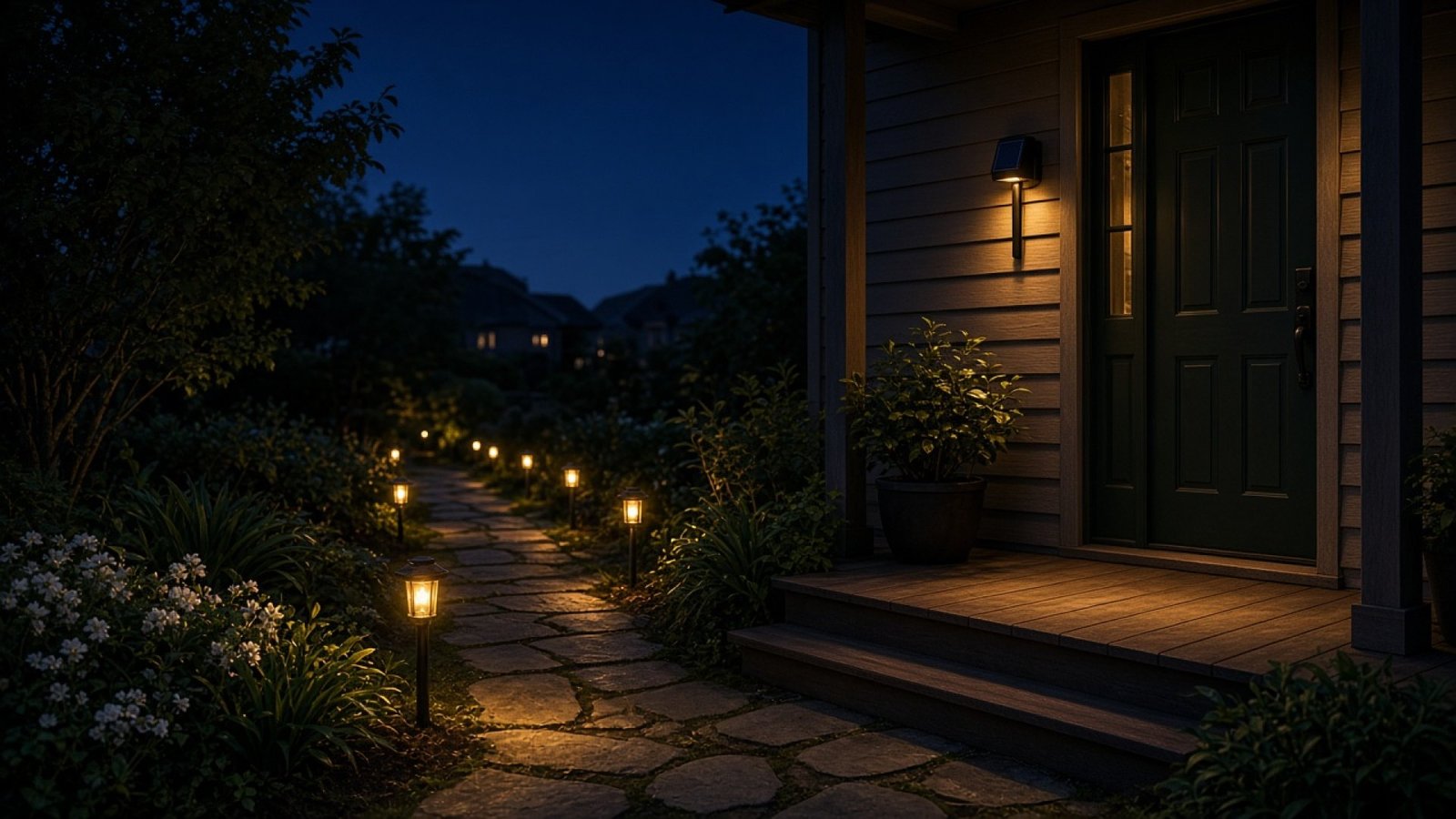
A house can look finished in the afternoon and unfinished the moment the sun drops. The walk from the car to the door becomes a guess. The steps are there, and then they are not. The hose, the bin, the toy that did not make it inside: all of them wait in the same dark strip between the street and the lock. That ordinary gap is where WireOWire started paying attention. Not to a missing renovation, but to a missing bit of light in a place people actually use.
Solar lights sound simple until you live with a bad one. A panel the size of a stamp. A battery that gives up in October. A sensor that clicks on at noon and stays dark at nine. We kept the lights that charge through a real day and still have something left after a long evening. Wall lights beside a door. Wedge lights across a patio. Street-style floods for the corner of a yard the porch never quite reaches. They are not decorations. They are the reason a path is still a path after dinner.
The small wall unit with four LEDs is usually the one that changes the habit. It mounts beside a door or over a gate. By late afternoon the panel has taken what the sky offered. After dusk it answers motion, or it holds a low glow, depending on the mode you chose. You stop carrying a phone flashlight out to the bins. You stop pausing at the top step to let your eyes invent the next one. It is the light you notice when it is missing, which is the best kind.
A wedge light does a different job. It throws a wider wash across a patio or a short drive, the sort of light that lets you see the chair you left out and the bicycle leaned where it should not be. Street-style solar floods sit higher and reach farther. They belong on the corner that stays black even when the door light is doing its job, the place where a hose and a wheelbarrow tend to disappear together.
We sell them because the alternative is a trench, a cable, and an electrician for a job the sun already does. A solar light will not rewrite a power bill in a dramatic way. It removes a decision. You do not ask whether the fixture is worth leaving on. It spent the day collecting what it will spend at night. That bargain holds when the hardware is honest, and it falls apart when the hardware is a toy.
Honest, here, means a few plain things. The panel faces the sky, not the siding in permanent shade. The battery is sized for the LEDs it has to feed, not for a number on a box. The housing can sit in weather without turning chalky in a season. We would rather list a light that costs a little more and still works next spring than a cheaper one that becomes a dark ornament by the first cold week.
Placement matters more than people expect, and it is the question we hear most. Which side of the door still sees sun after three. Whether a tree will cover the panel in July even if March looks clear. Whether two small lights beat one bright one on a long path. A bright light at the door and a dark stretch halfway to the street is a common mistake. Two modest lights, spaced so their pools meet, often feel safer and look calmer than one harsh beam aimed at the neighbor.
Weather is the other half of the conversation. A panel under an eave that never sees noon will disappoint you, and the light is not the villain. A panel that faces north and lives in shadow will do the same. If you can stand where the fixture will go and still feel sun on your face in the middle of the day, you are probably fine. If you cannot, move the light, or choose a model whose panel can sit a little away from the lamp itself.
Free shipping sits on every WireOWire order for the same reason the lights sit on the wall. The price you saw should be the price you pay. There is no minimum and no shipping line that appears at the last step. A wall light that starts at $9.99 only makes sense if delivery does not cost as much as the light. We would rather include the shipping than watch a useful object lose to a checkout surprise.
If a product says ask for price, it is not a trick and it is not zero dollars. Those items stay out of the cart so nobody checks out on a placeholder. Message us on WhatsApp at +1 786 790 4296, we confirm the number, and only then do you decide. The same door is open for placement questions: which wall, which tree, which of two lights. Email works too, at wireowire@gmail.com. Either one reaches a person who has stood in a yard at dusk with a light in one hand and a screwdriver in the other.
The porch that stayed dark was never a design problem. It was a timing problem. The day had already done the work. The house just needed a way to keep a little of it. That is still the idea behind the solar shelf: charge by day, use it at night, and let the walk from the car to the door feel like it belongs to the house again. Start with a wall light if the door is the dark part. Add a wedge if the patio is. Add a flood if the yard still swallows the last ten steps. Then leave the phone in your pocket on the way in.

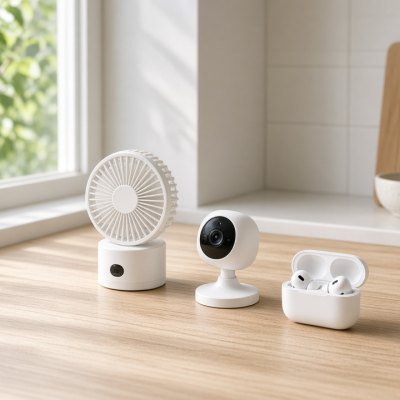
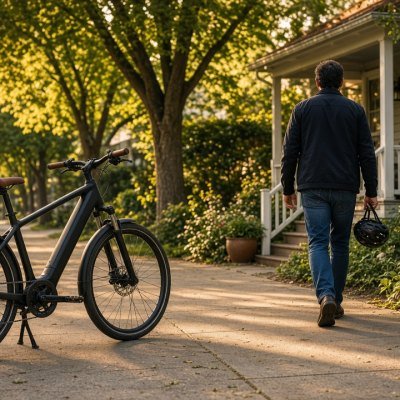
More from the shop, on light, rides, and the gadgets that earn a place.
06 October
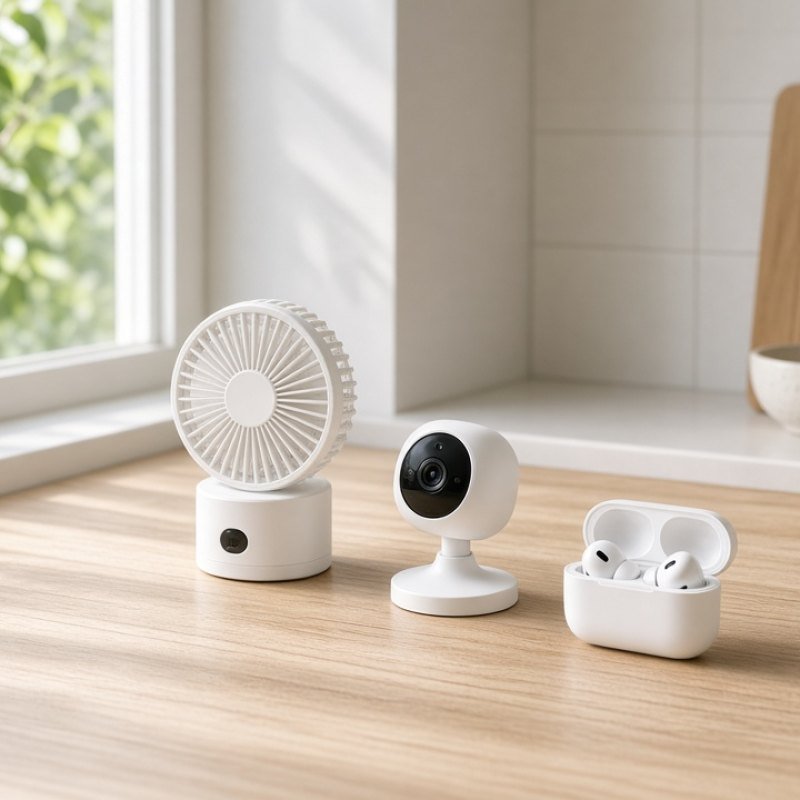
A house does not need more objects. It needs the few that can explain their job in a sentence and then do it.
06 October
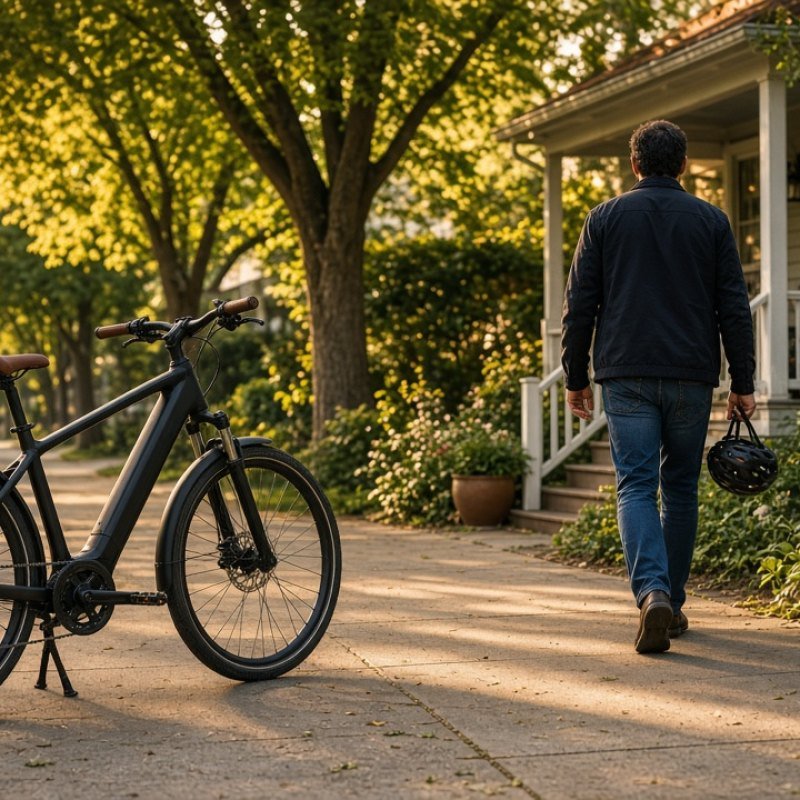
An e-bike does not replace every car trip. It replaces the ones that never deserved a car in the first place.
Your cart is currently empty. Let us assist you in finding the right product.
Cookie preferences